In the field of non destructive testing, precision and reliability are paramount. Among the various testing methodologies available to modern engineers, magnetic particle inspection (MPI) stands out as one of the most effective ways to identify surface and near-surface discontinuities in ferromagnetic materials.
Whether you are inspecting massive structural welds or delicate engine components like crankshafts, understanding how magnetic particle testing works is essential for maintaining safety and operational efficiency. This guide covers everything from the physics of a magnetic field to the specialized services and equipment used in the industry today.
What is Magnetic Particle Testing?
Magnetic particle testing is a non destructive evaluation technique used to detect cracks, seams, inclusions, and other flaws in materials that can be easily magnetized (ferromagnetic). The process relies on the principle that when a magnetic field is introduced into a specimen, any discontinuity in the material will cause a disruption in the magnetic flow.
This disruption creates what are known as flux leakage fields. When fine magnetic particles are applied to the surface of the component, they are attracted to these areas of flux leakage. The particles cluster around the defect, creating a visible indication that an inspection specialist can easily identify. This method is highly sensitive and can reveal cracks that are far too small to be seen during a standard visual inspection.
What are the Methods of Magnetisation?
To perform a successful magnetic particle inspection, the part must first be magnetized. There are several types of magnetization techniques, each suited for different shapes and sizes of components.
-
Longitudinal Magnetization: This is often achieved using a coil. The magnetic lines of force run parallel to the axis of the part, which is ideal for detecting transverse cracks.
-
Circular Magnetization: This occurs when an electric current is passed directly through the part or through a central conductor. This creates a circular magnetic field, which is perfect for finding longitudinal defects.
-
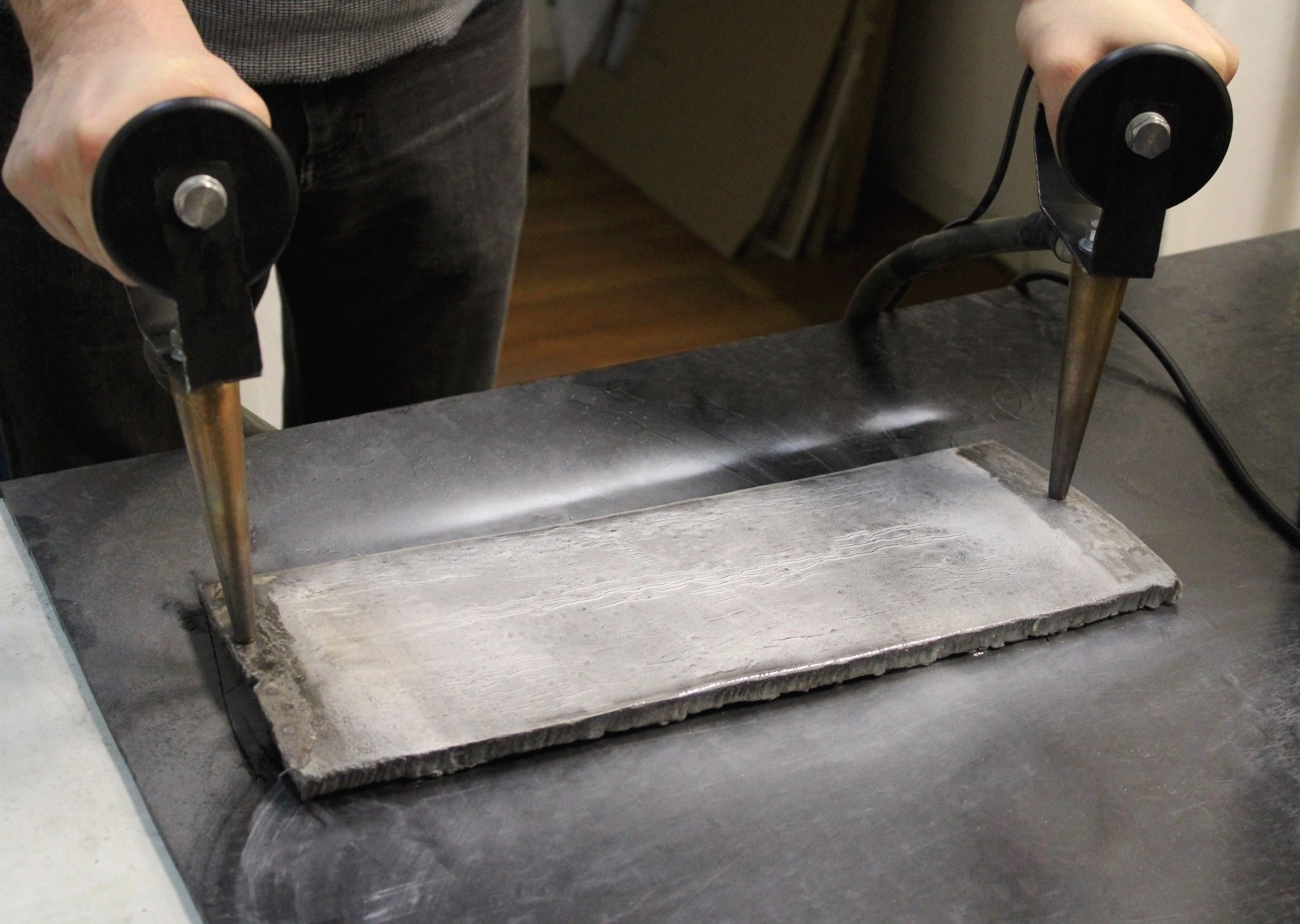
Portable Magnetization (The Electromagnetic Yoke): For field services and onsite inspections, an electromagnetic yoke is the most common tool. Yokes allow the technician to induce a localized field into a specific area, making it a versatile choice for weld inspection.
Dry and Wet Magnetic Particles
The "ink" used in this process consists of finely divided ferromagnetic particles. Depending on the environment and the sensitivity required, technicians choose between dry and wet application methods.
Dry Magnetic Particles
Dry powder is usually applied using a puffer or spray bulb. These particles are excellent for inspecting rough surfaces or hot components. Dry powder is highly portable and works well with yokes during outdoor inspection tasks. Because the particles are airborne, they can easily find large surface-breaking cracks.
Wet Magnetic Particles
In wet magnetic particle testing, the particles are suspended in a liquid carrier—either oil or water. This suspension is flowed over the part. Because the liquid allows the particles to move more freely, wet testing is much more sensitive to very fine, microscopic cracks.
-
Visible Wet Particles: Usually black or red, viewed under white light.
-
Fluorescent Particles: These particles glow under ultraviolet (UV) light. Fluorescent inspection is considered the "gold standard" for high-sensitivity applications in the aerospace and automotive sectors, where even the smallest flaw could lead to catastrophic failure.
What is Magnetic Particle Testing Used For?
The versatility of magnetic particle testing makes it a staple in numerous heavy industries. Since the method is non destructive, it allows for high-volume testing without damaging the assets.
-
Manufacturing: Used to check castings, forgings, and machined parts like crankshafts for cooling cracks or material inclusions.
-
Oil and Gas: Vital for the inspection of pipeline welds, pressure vessels, and storage tanks to prevent environmental disasters caused by flux leakage or structural failure.
-
Aerospace: Used during routine maintenance to ensure that landing gear and engine components haven't developed fatigue cracks.
-
Power Generation: Inspecting turbine blades and structural supports in nuclear and fossil fuel plants.
Pros and Cons of Magnetic Particle Testing
Like any testing method, MPI has its specific strengths and limitations that determine when it should be used.
The Advantages (Pros)
-
High Sensitivity: It can detect very fine surface cracks that are invisible to the naked eye.
-
Instant Results: The indication appears immediately as the magnetic particles cluster over the flaw.
-
Portability: With a handheld electromagnetic yoke, testing can be done on-site, on top of bridges, or inside cramped engine rooms.
-
Low Cost: Compared to radiographic or ultrasonic testing, MPI is relatively inexpensive.
The Disadvantages (Cons)
-
Ferromagnetic Only: This method only works on materials that can be magnetized (iron, steel, nickel, cobalt). It cannot be used on aluminum, copper, or most stainless steels.
-
Surface Focused: It is primarily a surface inspection tool. While it can detect some near-surface flaws, it cannot see deep internal defects.
-
Cleaning Requirements: The part must be clean and free of thick paint or grease. After testing, the part often needs to be demagnetized.
Magnetic Particle Testing Equipment
To achieve professional-grade results, you need the right tools. The quality of your magnetic field and the visibility of your particles directly impact the safety of your project.
The most common piece of equipment is the electromagnetic yoke. These devices are designed to be ergonomic and powerful, providing the necessary lifting force to meet international inspection standards. Additionally, technicians use UV lamps for fluorescent methods, field indicators (pie gauges) to verify the magnetic direction, and various applicators for dry or wet media.
At Teqto, we provide specialized services and equipment designed to meet the rigorous demands of modern NDT. Whether you need a portable solution for field work or stationary benches for high-volume manufacturing, ourMagnetic Particle Inspection range ensures your testing is accurate every time.
Conclusion
Magnetic particle inspection remains a cornerstone of the NDT industry because it balances simplicity with incredible sensitivity. By understanding the interaction between the magnetic field and the particles, engineers can ensure that critical components—from bridge spans to engine crankshafts—are safe for continued use.
Investing in high-quality yokes and consumables is not just about compliance; it's about the peace of mind that comes with knowing your inspection results are definitive.
